


Who, Not How: The Founder’s Guide to Buying Back Time and Scaling Your Business
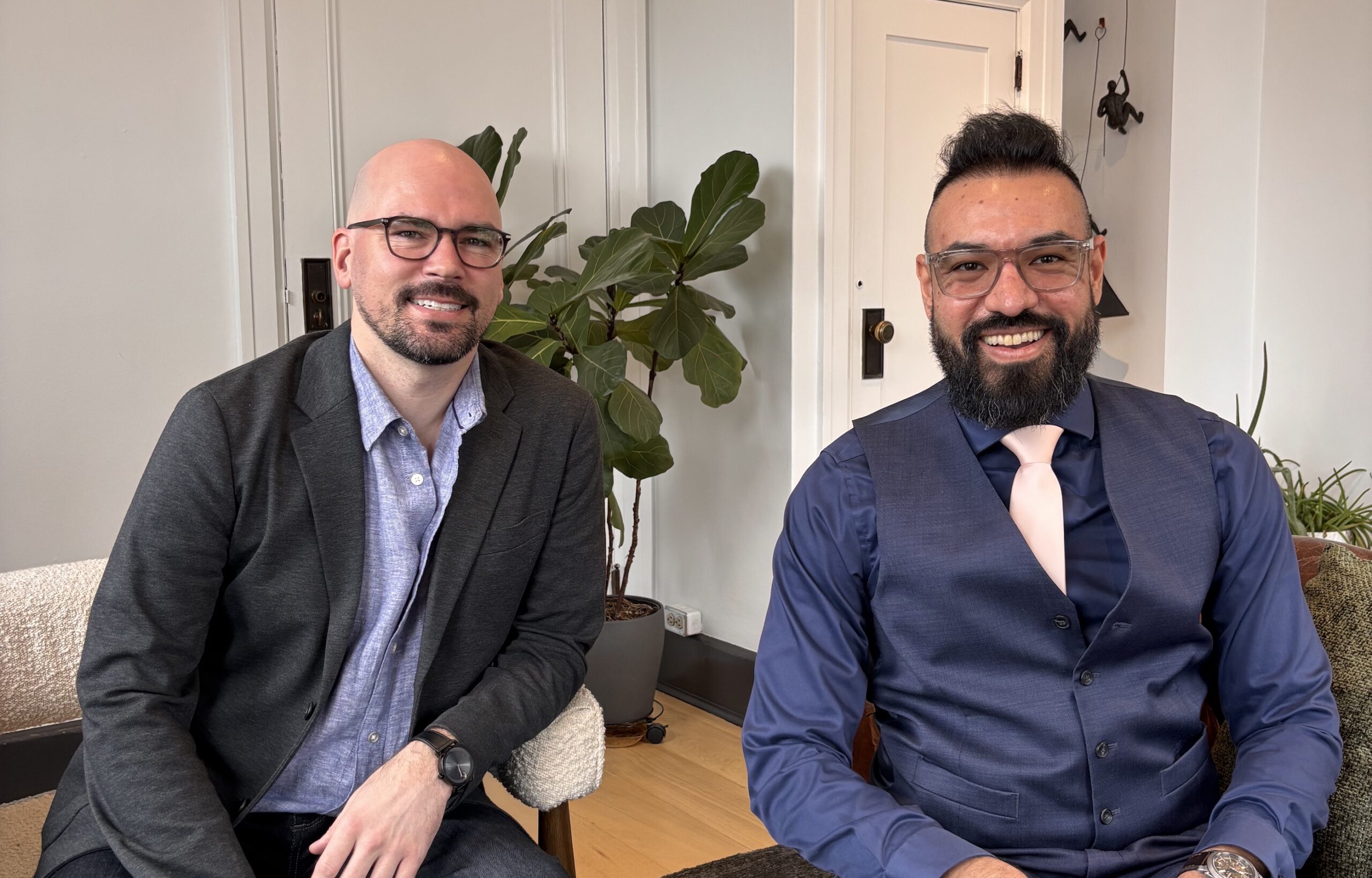
A insights-driven recap of a conversation between Colin Rose, President of Rose Agency, and Randy Rosales, Founder of Freelance Latin America.
Every founder reaches a crossroads where scaling the business starts to feel less like a triumph and more like a sentence. When every operational detail, marketing campaign, and administrative task depends entirely on you, growth stops being exciting 👉 it becomes a bottleneck.
Colin Rose and Randy Rosales sat down to discuss how business owners can break free from the day-to-day grind, eliminate burnout, and unlock true operational scale by shifting their mindset from how to who.
1. The Core Philosophy: Shifting from “How” to “Who”
When faced with a bold new business goal, the instinct for most entrepreneurs is to ask: How do I pull this off? According to Randy, that is exactly the wrong question to ask if you want to grow. Drawing from the core principles of the book Who Not How, he suggests a fundamental paradigm shift:
“Instead of trying to figure everything out by yourself, you need to find the experts who have already done it. Look for the people who have the expertise, the resources, and the energy that you lack, and hire them to help you achieve those goals. This saves you time, energy, and money so you can focus entirely on your zone of genius.”
When you delegate the “how” to a trusted “who,” you transform your role from a reactive operator into a strategic leader.
2. In-House vs. Agency: The Math of Opportunity
One of the most practical applications of this philosophy shows up when a business decides to expand its marketing footprint. Founders often debate whether they should hire a full-time internal manager or partner with an external team.
Colin breaks down the reality of this choice from an agency perspective:
- The In-House Bottleneck: Hiring a single full-time marketing manager means you get one generalist. That individual is forced to wear multiple hats, acting as a strategist, web developer, copywriter, and data analyst all at once.
- The Agency Advantage: If you take that exact same full-time salary (or less) and invest it in an agency, you gain fractional access to an entire team of specialists. Suddenly, your business benefits from an advertising executive, a fractional CMO, a project manager, a web developer, and a social media manager simultaneously.
By outsourcing to an agency, you aren’t just hiring an employee; you are buying an entire ecosystem of experience.
3. The Secret to Time Reclamation: The Calendar Audit
You cannot delegate effectively if you don’t actually know where your hours are leaking away. Randy notes that the most common denominator among struggling founders is a total lack of awareness regarding their own schedules. To solve this, he recommends a strict Calendar Audit:
- Track Everything: For one full week, write down exactly what you are doing every 15 minutes.
- Evaluate Your Impact: Look over the data. Are you spending at least 80% of your time on activities that either generate revenue or energize you?
- Identify the Drains: If the answer is no, it is time to systematically offload the remaining 20% or more.
Colin points out that administrative tasks like billing, invoicing, and payroll frequently creep into a founder’s evening hours, draining their creative energy. If your personal hourly rate is valued at $200, but you are spending hours doing basic billing yourself, you are actively costing your business money. You can easily hire a specialized “who” for a fraction of that rate, saving your evenings for dinner with your family, your kids’ soccer games, or well-deserved rest.
4. Escaping the Golden Cage: Building a “Sell-Ready” Business
Many founders accidentally build a prison for themselves, a golden cage where the business cannot survive without their constant intervention.
“If the business depends entirely on you to run day-to-day operations,” Randy warns, “you don’t own a business. You own a job. And it’s the worst job in the world because you’re working for a lunatic.”
Even if you have no immediate intentions of selling your company, you should always design it with a “sell-ready” mindset. This means making yourself entirely extractable from the organization:
- Preventing Self-Sabotage: When business growth requires more of your personal physical labor, your subconscious mind will actively self-sabotage new opportunities to avoid the pain of overwork.
- Unlocking True Freedom: Building a business that runs independently gives you options. Whether you want to hand the company down to family, transition ownership to employees, or take an extended paternity or medical leave, an extractable model ensures the business thrives while you protect your personal life.
5. Trust, Structure, and the Art of Letting Go
The biggest hurdle to successful delegation is trust. How do you hand over core organizational functions without worrying that everything will fall apart? Randy explains that trust isn’t a blind leap of faith; it is a byproduct of the right organizational structure:
Clear Accountability & Outcomes
Every team member needs a clear job description so they completely understand what they own. Beyond standard duties, define exactly what a successful outcome looks like so they have true ownership.
Success Metrics (Scorecards)
Implement clear Key Performance Indicators (KPIs). A simple weekly scorecard gives your team concrete goals and allows you to objectively audit performance without micromanaging.
Documented Systems (SOPs)
Create standard operating procedures, playbooks, and checklists. If you don’t provide a clear system for how tasks should be done, your team will spend hours guessing, leading to frustration and inefficiency.
The 80% Rule for Founders: > “Nobody is going to do it as perfectly as you,” Randy admits. “But 80% done by someone else is 100% freaking awesome if it means you get your life back. Trust your team enough to let them scratch the car, just don’t let them total it.”
6. From Luxury to Leverage: The Role of an Assistant
When entrepreneurs think of hiring an Executive Assistant (EA), they often view it as an expensive corporate luxury. In reality, an EA is one of the highest-leverage investments an operational founder can make.
An EA’s primary role isn’t just managing calendar entries; it is protecting your energy. The constant back-and-forth of scheduling emails, client coordination, and inbox management drains your mental capacity. By introducing an assistant to handle the administrative gatekeeping, you clear the mental runway required to focus on big-picture strategy, high-level client relationships, and business development.
As your business grows, this leverage scales with you. A part-time assistant can eventually scale to full-time, and eventually, they can bring on their own part-time support or interns to handle repetitive tasks, allowing your core team to remain strictly focused on high-value initiatives.
The Bottom Line
At the end of the day, you can always make more money, but you can never manufacture more time. Shifting your mindset from “How do I do this?” to “Who can do this for me?” is the ultimate key to reclaiming your freedom, scaling your operations, and ensuring you don’t look back with regrets.
By building robust structures, leaning on expert agencies, and trusting your team, you can finally transition from an exhausted operator to a visionary owner.
Want to learn how to delegate your marketing to a dedicated team of experts so you can get back to your zone of genius? Reach out to the team at Rose Agency.